

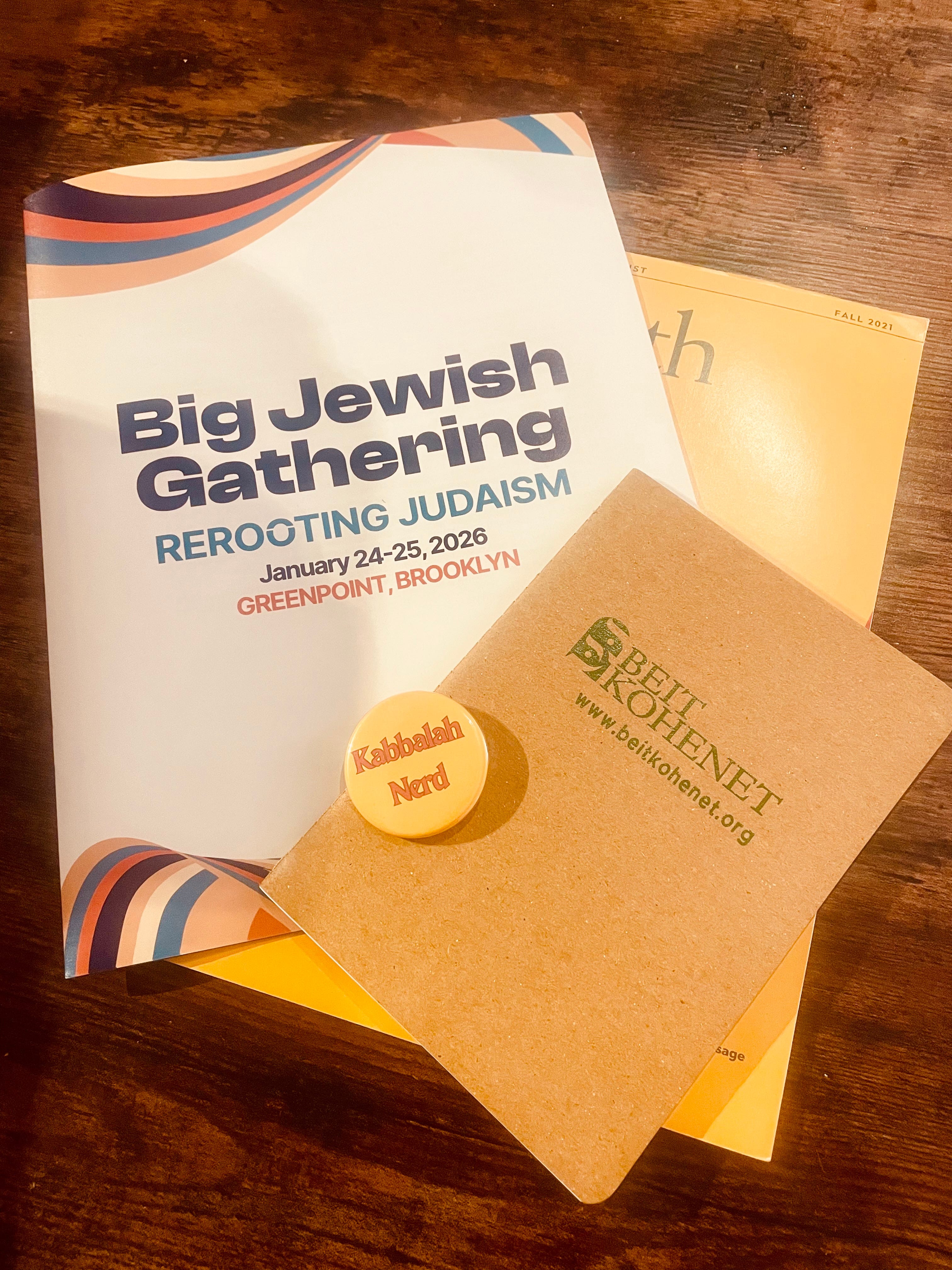
“That he not busy being born, is busy dying… And if my thought-dreams could be seen, They’d probably put my head in a guillotine”
Bob Dylan, “Its Alright Ma (I’m Only Bleeding)”
[ Note to reader. These reflections are my own and do not necessarily reflect participants in “The Big Gathering.” They reflect the perspective of a participant /observer only. Use them as you wish]
Elsewhere in a Substack (“The Pivot of Liberal Zionism: A Prolegomenon, Part I”), I wrote about schisms in Judaism, how momentous events can initiate a fracturing of the Jewish people that create new alternatives and bury others, new growth nourished by returning to older motifs re-imagined in a new world. The expulsion from Spain may have initiated new formulations of messianic hope that took root in Kabbalah (a thesis promulgated by Gershom Scholem and challenged by others), the Chmielnicki massacres in 1648 may have contributed to the swift popularity of the Sabbatean movement in 1666, the pogroms of the 1880s may have helped generate the Zionist movement and the first immigration to the land in the 1890s.

I submit that the destruction of Gaza should be counted as such an event. Here I separate October 7 from Gaza even though obviously the latter is a response to the former, because while the former was horrific and catastrophic beyond words, I am sympathetic to Yuval Noah Harari’s suggestion that the destruction of Gaza created a structural change that he believed was monumental. The massacre of October 7, in all its horror, did not initiate a monumental shift in Jewish identity as much as solidify, and sometimes amplify, previous iterations of Jewishness already extant. But, Harari claims, Jews taking it upon themselves to utterly destroy another society has little precedent in post-Temple Jewish history.
I suggest two new, or renewed, dimensions in the wake of the monumental destruction of Gaza. The first, which I will address in a subsequent Substack, I think is the next phase of what Jacob Neusner called in the 1980s “Negative Judaism.” Neusner was commenting on the centrality and, to his mind, overemphasis, of the Holocaust in American Jewish identity that he believed created a negative identity structure whereby one’s Jewishness was rooted largely in the experience and commemoration of the Nazi genocide. Neusner believed this was an unhealthy, and unsustainable expression of collective self-fashioning that was countered, to some degree by the rising consensus of Zionism, which he also supported but did not think could, by itself, sustain Jewishness in the Diaspora in the long term. This new iteration of “Negative Judaism” is what I am calling the “Anti-Zionism is Antisemitism” phenomenon that has permeated Diaspora Jewish consciousness.
“New Ivriism”
The second dimension of this post-Gaza moment is the acceleration of a spiritual renaissance I call “the return to Ivriism,” or New Ivriism, an extension of Jewish Renewal that is taking form in this liquid moment. What I call New Ivriism is indeed a kind of schism in Judaism no less radical than the rabbinic reforms of late Antiquity, the Karaite-Rabbinite debates of the eighth through tenth centuries, Sabbateanism, Hasidism, post-Enlightenment Reform Judaism, or Zionism. All these new movements were rooted in some inchoate form of what we now call “Judaism.” These schisms understood monumental events in history as meriting a deep and radical re-thinking of how Judaism should be lived. Some survived, some did not, but even those that did not survive intact, like Sabbateanism, left impressions (reshimot) for future generations.
In our post October 7 destruction of Gaza world, Jewish communities have largely been occupied with debating Israel’s complicity, or lack thereof, in the destruction of Gaza, the justification of lack thereof of the war itself, and by extension, the rising antisemitism that was sparked by the war and has now spread beyond it. This is well known and documented, and the debate, as I mentioned above, has given birth to another kind of Negative Judaism. Holocaust centrality has given way to “Anti-Zionism is Antisemitism” centrality, and the growth of antisemitism as the glue that holds Jewish collectivity together; antisemitism ergo sum.
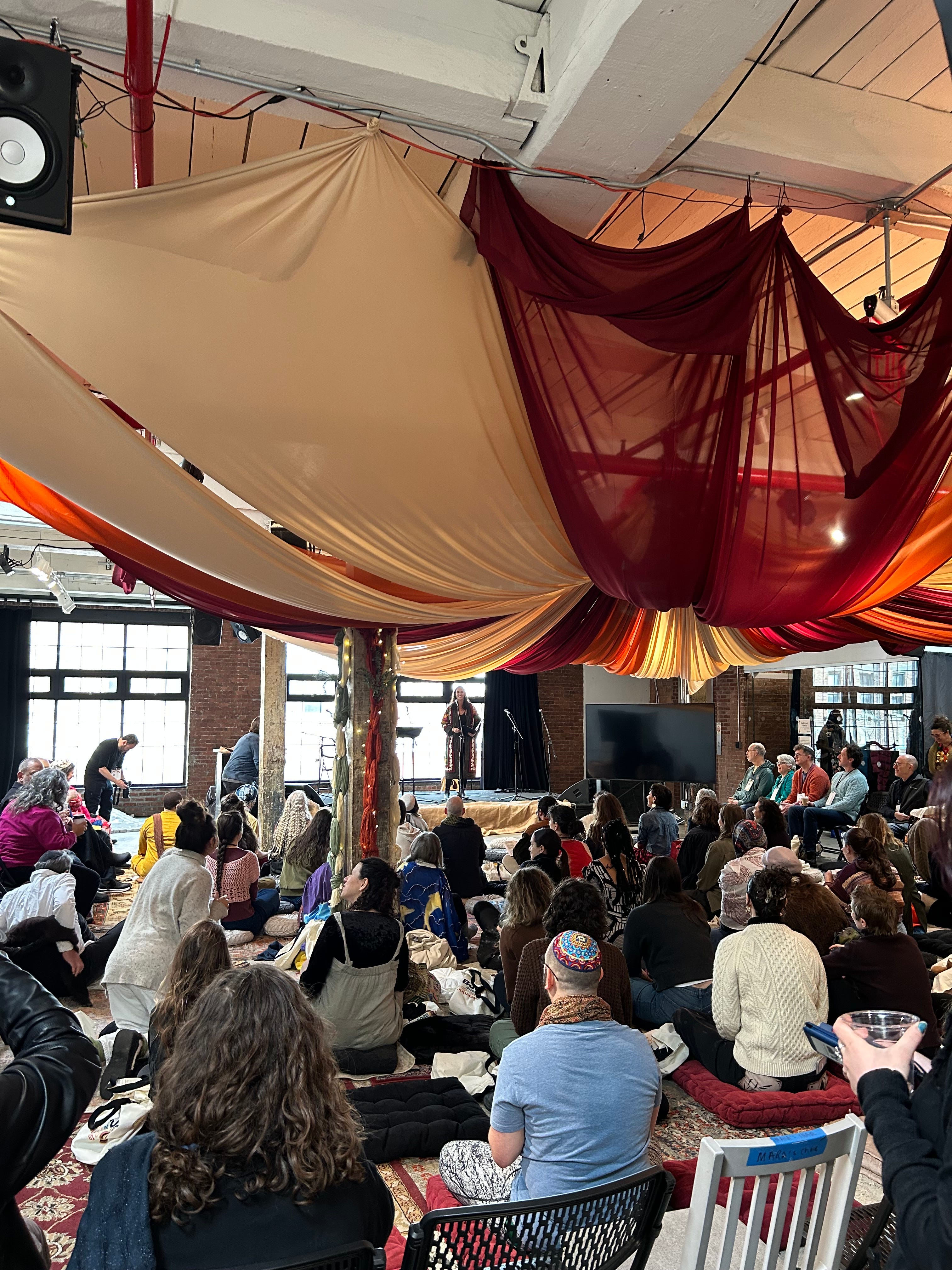
One attending the “Big Jewish Gathering” in Brooklyn January 24, 25 would witness another emergent Jewish alternative to this moment I call New Ivriism. I borrow the term “Ivri” from some of the speakers who defined this movement outside the Jew, Jewishness, or Judaism triad, even as many still identified with each of those. The schism, however, is radical enough as to merit a new signifier, hence Ivri. That term is often translated as “Hebrew” and was used by radical Zionist Micha Yosef Berdichevsky, when he said, “I am the last Jew and the first Hebrew (Ivri)” or Yonatah Ratosh and the Canaanites who called themselves “the Young Hebrews (Ivrim Ze’irim).” Another example is American Jewish thinker Horace Kallen who shunned Jews who defined Jewishness through religion, calling them “Judaists,” and preferred a more secular Jewish identity he called “Hebraism” (an Anglicized rendering of Ivriism). I bring these examples simply to illustrate the term Ivri has often been used by Jews an alternative to the signifier, Jew.
At the Great Jewish Gathering, the term Ivri began to take on a more ancestral dimension, a more literal one, that is, not “Hebrew” but “Border-Crosser,” (‘Over) one who traverses boundaries as part of a devotional exercise. The literal rendering of Abraham described as an “Ish Ivri” as “border-crosser” (or “one from over the border, the Euphrates River”) was suggested decades ago by Arthur Waskow. The midrash Genesis Raba 42.8 described Abraham as an “Ivri” in the following way. “The entire world was on one side and he was on the other side.” The Ivri quality at “The Big Jewish Gathering” included a different kind of Jewish crossing; constructive religious syncretism, gender fluidity, ritual experimentation, artistic audacity, and liturgical creativity. The gathering was multi-generational, multi-ethnic, politically amorphous, post-national and post-survivalist. Let me unpack a few of these.
One of the most refreshing aspects of this gathering, aside from its creativity and generosity of spirit, was its apolitical nature. It seemed to me an example of the Jewish Left’s move beyond Zionism and beyond anti-Zionism. In fact, these markers which have come to define our present moment, were all but absent. There were those who identified as Zionist and those who identified as anti-Zionist. And those somewhere in the middle. And it simply did not matter. As far as I know, it never came up. It’s not that no one cared, many cared deeply about their convictions on that question. Rather, the gatherers seemed to have other priorities; they were seeking to (re)construct a new form of positive Jewish living beyond Judaism, further inside Judaism, and before Judaism, a collective reach back to an ancestral heritage reimagined in the 21st century. “Beit Kohenet” the growing organization “ordaining” Jewish priestesses, was very present in the gathering (see Jill Hammer’s The Hebrew Priestess: Ancient and New Visions of Jewish Women’s Spiritual Leadership or Tikvah Frymer-Kensky’s In the Wake of the Goddesses)
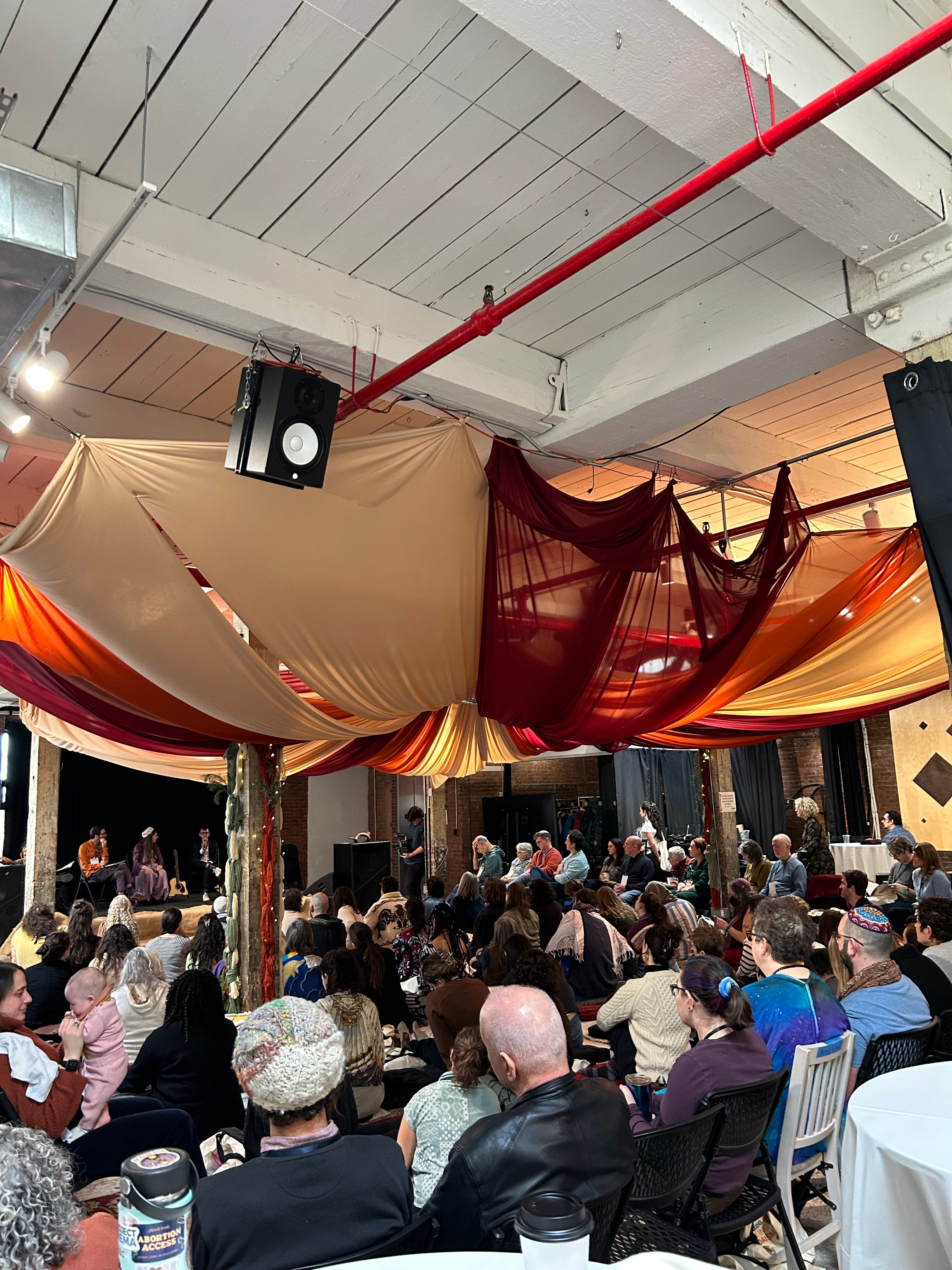
Jewish “survivalists” worry about assimilation, intermarriage (I am quite sure some at the Gathering were intermarried, some not even Jewish), fears of antisemitism etc. In the Big Gathering that sentiment was nowhere to be seen. The participants seemed more concerned with revival than survival. Again, this is not because they were not living in the same world as present-day Jewish “survivalists” of all stripes, but rather that they saw this opportunity to reach back to the ancient past to revive and re-create, or to revive through re-creation, ritualistic and contemplative themes eclipsed by the normative rabbinic tradition we call Judaism.

“Exploring Ancestral Technologies”
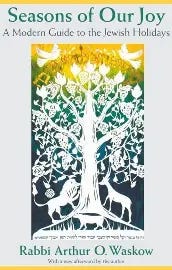
The first panel consisted of a group of what I would call “New Ivriists” who explored what they called “ancestral technologies,” a term that incorporates halakha, custom (minhag) lost ancestral paradigms, new forms of ritual behavior (technologies), and re-envisioned ancient Hebraic modalities that connect with the earth and its plentitude. This is a new form of religious practice that is earth-bound and heaven-ascending. That is, it views piety through a Gaia (Mother Earth) lens (an idea promulgated by Zalman Schachter-Shalomi) dedicated to planetary preservation, ecological sensitivity (think of Reb Zalman’s “Eco-Kashrut” or Arthur Waskow’s Seasons of Our Joy or David Seidenberg’s Kabbalah and Ecology) as an expression of ancestral wisdom and the belief in the potential for experience and that which exists outside of normative sensory perception, call it “Jewish para-normality.”
The use of the term “ancestral” as opposed to “traditional” is intentional and generative. Tradition implies a more or less static set of precepts that, in modernity, can be revised to meet contemporary needs, but carries a weight many gatherers at this meeting seek to transcend. Mordcai Kaplan once said “tradition has a vote but not a veto.” I would say the New Ivriists see it somewhat differently. Tradition is a technology, it produces a set of modalities that help a practitioner achieve, following Hasidism which lies at the root of much of New Ivriism the goal, which is to witness how the world is more than the sum of its parts, that there is more to all this than we were taught. Put otherwise, devekut, an experiential sense of communion, with the transcendent, with the immanent, and with one another. Ancestral technology is thus the path to experience the “excess” of the real. When a technology ceases to do that for any number of reasons, one needs a new technology, and the place to look for it sometimes extends back before tradition, back imaginatively to ancestral roots, back to a mythic past real and/or imagined, to takes us from Moses and Zipporah to Abraham and Sarah.
The “New Hebrews” (Canaanites) or even some early Zionists such as Aaron David Gordon, saw it in the Land, for Gordon the soil being the catalyst of the unity of the cosmos and the soul of a people. For others, Hebraism replaced Judaism when the Land was reintroduced. If Judaism is a life without territory, territory supersedes Judaism. But there is another iteration of this sentiment that expands beyond the Land to the planet itself. And the “people” (that is, the ethnic collective) also serve in a technological capacity that reaches beyond ethnic boundaries to embrace humanity, not in the form of assimilation, that is, the disappearance of the Jew, but rather the reappearance of the Jew as Ivri, as a carrier of an ancestral tradition it seeks to impart of those who need it, now in a reconstituted form of a ritually based and ancestrally inflected Global Invriism (or, if you will, Global Judaism).
The New Ivri is a universalist, not in the modern assimilationist sense but in the Gaian sense. That is, as I see it, this ascending paradigm draws from a New Age modality, but it not limited by it. The particular is rooted in an inheritance, a gift that is to be shared and make common cause with other gifts of other ancestral traditions. This is not syncretism in any facile way but rather a collaborative way. The goal, as I see it, is to make the world an image of its creator. Divine election, even the universalism of ethnical monotheism, is an old technology from a distant time.
Why Now?
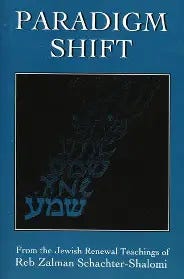
What is it about this moment the precipitates this New Ivriism? There is no easy answer to this question, but I think that something broke in the choice to destroy Gaza, even as a response to a tragic attack. Something broke in the consciousness of those who had already been inculcated with spirit of post-halakhic, Gaian, global universal/particularity largely through the Jewish Renewal of Zalman Schachter-Shalomi. Destroying another people, even in an act of defense, even outside genocide, was a survivalism many gatherers could not accept. Identity through negation (antisemitism ergo sum) was anathema to a worldview that Reb Zalman taught, and his disciples disseminated. For many, the technology of nationalism began to crack, inevitable or not no one knows. Reb Zalman thought his Paradigm Shift Judaism began with the Holocaust. The Holocaust for him fractured modernity beyond repair. Without suggesting any comparison whatsoever between the Holocaust and Gaza, a new paradigm growing out of Gaza not in its scale but in the level of vengeance displayed by Jewish state power.
For some in the nascent New Ivri pan-movement, the rupture of modernity, the rupture of the Holocaust, and the rupture of Gaza required a deep look backward, before the rabbis, before the “tradition” before the weight of authority prohibited the crossing of boundaries. The tradition, in some sense, was that which drew boundaries, and thus the “ancestral” is a way to erase them, to re-draw the circle to include possibilities lost and now revised.
Renewal and New Ivriism
In many ways, The Big Jewish Gathering was a Renewalesque event. And yet it wasn’t. I noted to a friend that Reb Zalman’s name was mentioned only sporadically, something I think he would have appreciated. It is not that Reb Zalman was absent; it was that he was so immanently present as to obviate any need to mention his name. The Big Jewish Gathering was in many ways Reb Zalman’s brainchild, his gift to us, but many, perhaps most, in the room never met him. If Reb Zalman envisioned a new Judaism in a changed paradigm, I am sure he could understand a newer Judaism (or an older-newer Ivriism) in a different paradigm. Has Gaza introduced that new paradigm? Perhaps, it’s too soon to tell. But the creative energy that flowed through the Big Jewish Gathering indicated to me that the process has begun, a process not focused on Jewish survival, but Ivriistic possibility, not to hate out of necessity but to love out of a belief in the divine and in the human. Not to be afraid of other religions but compelled by them, not to view ethnicity as exclusive, but sacred wisdom as expansive.
New Ivriism and Textual Innovation
One question worth addressing here is the status of the Jewish literary tradition, an enormous corpus of texts written by Jews over millennia. Where does that fit into the New Ivriism? The gatherers come from a variety of backgrounds, some deeply ensconced and adept in Jewish literature, others less so. Some not at all. Is that much different than most Jewish communities today in North America? The textual tradition, like halakha and liturgy, is viewed as a technology. Texts are the building blocks of the New Ivriism but not as an object of study in the traditional sense as much as a resource to forge new ways of serving the creator (here too, close to Hasidism). The Big Jewish Gathering began with a rendition of an original song to the words of enigmatic Sefer Yezeriah, “When your heart runs, return to the p/Place.” “Place” (makom), from physical space, to womb, to the divine (as the midrash says, “God the place [makom] of the world but the world is not God’s place”)? This is not simply psycho spirituality but also drenched in Hasidic teaching and sentiment.
The Hasidim were radical innovators but worked within the orbit of traditional Judaism peppered with Kabbalah but rarely stepping outside the confines of the halakha. The borders of that tradition broke temporarily through Sabbateanism but more so through reform, that is, Judaism in modernity, broadly conceived (I consider Reform, Conservatism, Modern Orthodoxy, Zionism, and Reconstructionism all iterations of reform).
New Ivriism is born after that severance. In that sense, piety becomes a technology and not a tradition. But that liberatory move enabled this new bourgeoning movement the freedom not only to go forward, incorporating contemporary values, but backward to ancestral traditions. The severance of tradition enables movement in both directions which produces something that “Judaism,” conventionally conceived, cannot quite capture. In fact, the Ivri wants what Judaism erased or excluded. For example, one panelist spoke about a re-adaptation of apocryphal and pseudepigraphal texts, texts written by Jews/Ivrim that were not included in the biblical canon. They are “ancestral” texts but not officially “Jewish” ones.
For at least the past 150 years scholars have revived these texts, translated them, produced critical editions and commentary, all to better reconstruct the ancient Israelite past. This historical exercise has born much fruit but also provided those without that scholarly acumen a new window into “ancestral” literature. Why should we not build ritual from I Enoch, or Jubilees, or 4 Ezra? Why should that aspect of the ancestral tradition be erased simply because a groups of sages in late Antiquity concluded they were not worth inclusion in the canon? For someone whose Jewish life lives solely within the limitations of tradition, the answer is clear. But if one steps outside those limitations, the question is open.
David Ben Gurion re-introduced the apocryphal books of the Maccabees into the Israeli curriculum because those texts suited the needs of his national project. Ben Gurion knew that to promote his new Zionist agenda the canon had to be expanded to include texts the rabbis excluded. Bar Kokhba, who the sages thought was a false messiah and relegated his revolt mostly to Lamentations Raba, becomes in the Zionist imagination, a military hero now placed at the center of Lag B’Omer.
But why not do so toward pietistic, or liturgical, ends. Why not to revive the Hebraic imaginative spirit, fictional creativity, scriptural exegesis? Ancestral is revival for the sake of renewal, to “cross-over” the canon to explore the treasures of the excluded ones, the non-conformists, those who may have challenged convention.
Is New Ivriism a Passing Phenomenon?
In short, yes, as much as anything is a passing phenomenon. But that is not really the question. The question is how deeply will this nascent movement change the landscape of Jewish life? That is yet undetermined. However, as I mentioned above, I view this new phenomenon as a response in large part to the fracturing of Jewish life after Gaza. It certainly began before, years before, but as in other deviations from the norm, Gaza served as an accelerant, creating opportunities for these events to occur with growing support. The Big Jewish Gathering was sold out and the waiting list exceeded 120 people.
Traditionalists and mainstreamers of all stripes will scoff at its irreverence, criticize its knowledge base, question its motives and, as conventional communities often do, predict its swift demise. They may be right, or they may be wrong, that is a question for the next generation. A small circle of mystics around an enigmatic and largely unknown figure named Isaac Luria in the 16th century transformed Judaism in the course of about 18 months. Spinoza was excommunicated by the rabbis of Amsterdam and is now viewed by many scholars today as “the first modern Jew.” Early Hasidism, deemed a heretical sect by some in its early years and subject to a writ of excommunication supported by the Vilna Gaon in 1772, transformed the Judaism of today. Mordecai Kaplan who was “excommunicated” by Orthodox Jews in early 20th century America, left JTS in part because his ideas were too “radical,” and is now considered one of the most influential Jewish thinkers of the 20th century, and not only in his Reconstructionist movement. Zionism was a small and marginal movement in its beginnings, viewed as “utopian” by some, and “heretical” by others. It weathered that storm and, with the aid of external events, rose to become one of the most popular and consequential Jewish movements in moderntiy.
Jewish Renewal arguably began around 1975 with Zalman Schachter-Shalomi’s Fragments of a Future Scroll: Hasidism for the Aquarian Age, that will re-appear in a new 50th anniversary edition this spring with Ayin Press. We are now half a century past that moment generated by postwar and Cold War anxiety of nuclear war, the counterculture, Vietnam, the New Age, the moon landing, and the story of Israel as “making the desert green.” The resources of Renewal remain and are growing, and not only in Renewal spaces. But something else is happening, as it always does, and it is worthy of our exploration.
Jewish Border-Crossers, ecumenical spirit seekers, syncretistic liturgists, ancestral excavators, post-territorial spiritualists - the New Ivri “…is a busy being born…”
Thanks to Carla Sulzbach
I see this as a foundational statement for the Diaspora Judaism of the post-Gaza age, especially the last section. It is most important, not for Boomers like myself, but for the next generations, who are struggling and will struggle to find - or abandon - their Jewish identity. A key question that Magid does not touch upon is, what will be the structures underpinning this new self-consciousness? Will it be "gatheinngs," both big and little? Havurot? "No structure at all" might sound nice, but it's a recipe for instant death, because even the most elegant and scholarly words in long essays cannot survive on their own without some kind of earthly form, however imperfect. This is the quandary of all social and spiritual movements. No movement, no future. But thank you, @ShaulMagid, for this vision.
Dear shaul. You are bringing an important and interesting suggestion here, that the Gaza war broke some of the old Jewish identities, and opened the path for the IVRI identity to take root. This is especially interesting for me. In 2010, a group of my students in Israel came together and created an academy in TLV for my teaching of the IVRI path, which they saw as radically important for the new way Israelis can identify with their "Jewish/kabbalistic" roots. In 2011-2012, my friend and colleague Shmuel Shaul and I were leading this new academy, which had about 30 teachers and courses (one of whom is now Prof. Mariana Ruch Midbar) and more than 100 students and made a big impact.
We called this academy "NEVI'AH (double meaning intended) -- the Hebraic Academy of Universal Spirit". or in Hebrew:
נביעה - האקדמ-יה העברית של הרוח האוניברסלית
The main intro course, which I was teaching, was called
יסודות הרוח העברית
The foundations of IVRI Spirit
One of the meanings we spoke about was, of course, the Abrahamic way of being on the other bank of the river. another was being able to cross over and go to the beyond (ME'EVER), and yet another one was connected to the meaning of Transpassing the law (AVARYAN), which some scholars, as I assume you know, say the term IVRI came from in ancient Egypt, when they called the group that did not obey the Pharaoh's law "HABIRU".
We thought that the IVRI path is all of the above: from transcendence (Me'ever) to non-conformism (Me'ever Hanahar) to transpassing the laws of the Matrix, and bearing the burden of being considered an outlaw and a contravercial figure (Avaryan) by many, therefore risking cancellation.
I remember coming the NY in 2011, when the Neviah Academy blossomed, and talking to some leaders there (Rabbi Jill is one of them) about the IVRI path of embodied, non-halachic, semi pagan, "Judaism" as the next step of the Renewal movement, one that have the potencial of breaking out of the confinments of not only Israeli spiritual generation, but also the American one. But I guess it was too early on. The atrocities of Oct 7th and the Gaza war did not take place yet and what was clear to me, as a more than 7th generation Israeli local (part of my family came to Jerusalem in the 16th century and another part in the late 18th) -- that ISRAEL as a militant state is sinking down, was not yet obviouse to the NY american Jewish folks, or maybe it seemed irelevant.
So, thank you for adding this aspect, this sad aspect, to the puzzle.
I will be open to converse more about Neviah and the IVRI teachings it infused into Israel if you so with.
~O.P